
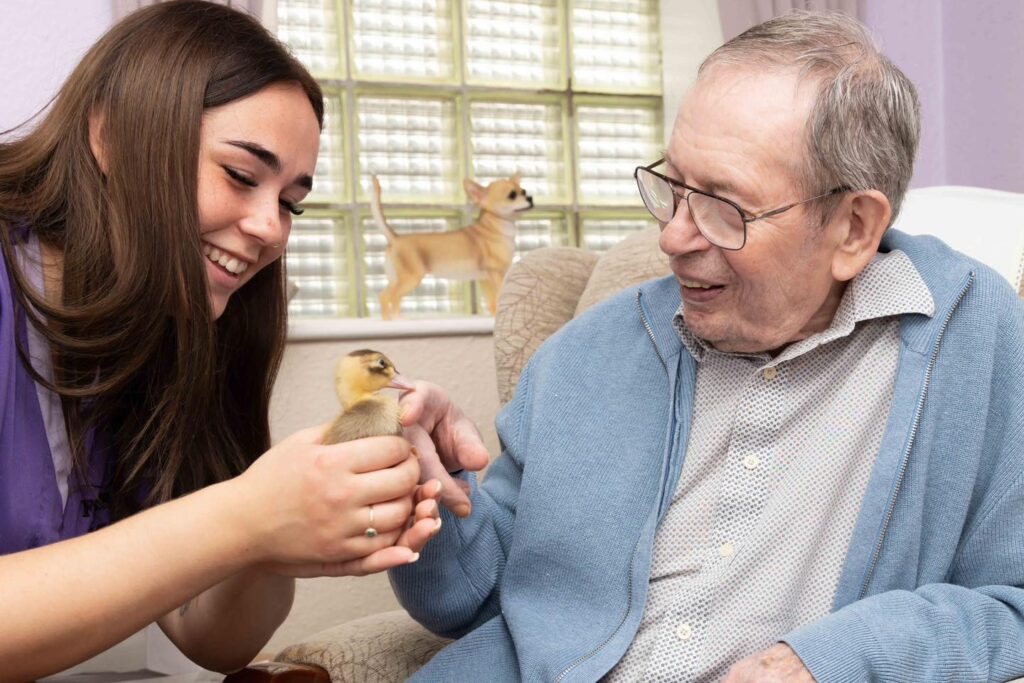
Meaningful connections are important for anyone at any age. As we get older, it becomes more difficult to make those connections, therefore it’s key to introduce activities within care homes that provide the best methods in forming those relationships that the elderly seek to maintain the best and most positive emotional well-being. This is why we have introduced pet therapy to our regular rota of activities at our care home in Weymouth.
But what exactly is pet therapy and how does it help our care home residents improve their emotional wellbeing? We’re here to explore the benefits, how it helps our residents and the types of pet therapy we offer.
What is Pet Therapy?
Pet therapy is a structured form of interaction that brings people and animals together in a guided and supportive environment. This therapeutic approach involves a trained handler who facilitates engagement between the individual and the animal, encouraging interaction, companionship and play.
There are many different types of animals used in pet therapy, which can include:
- Alpacas
- Dogs
- Cats
- Horses
- Birds
- Rabbits
- Farm animals
- Reptiles
Therapy animals are specifically trained to provide comfort and affection and encouraged to interact with people with mental and physical conditions, as well as those with limited abilities.
How Can it Help?

Therapy using animals is often used to enhance the emotional well-being of the elderly. At Friary Care, we have found that it has been especially beneficial for those with dementia as we have seen first-hand that it improves self-esteem and confidence among our residents with dementia.
Pet therapy provides a unique sense of comfort that can be difficult to achieve through other forms of therapy. It can provide the social support and companionship that the elderly are seeking, especially for those who feel a sense of loneliness. This type of therapy creates cherished memories for seniors through playful activities and the companionship of a loving animal. Through these meaningful interactions, the participants can significantly benefit from a boost in mental and emotional health.
More benefits of pet therapy for the elderly include:
- Improving motor skills and joint movement.
- Increasing motivation and improving movement.
- Boosting self-esteem in the elderly.
- Increasing and improving communication, as well as boosting social skills.
- Improving interactions with others and increasing the willingness to participate in activities.
Different Types of Animal Therapy For Care Homes
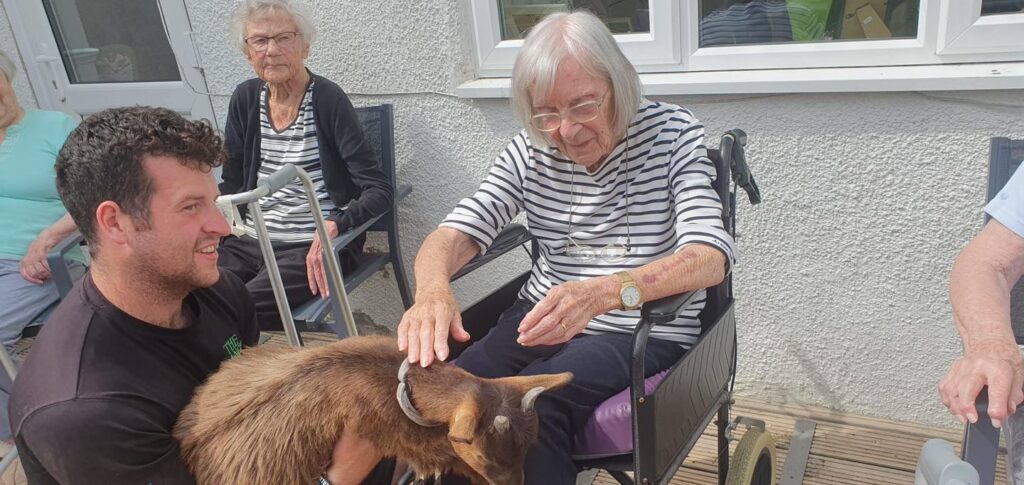
There is a wide range of animal therapy types that the elderly can benefit from, many of which we offer here at Friary Care in Weymouth.
Animal-Assisted Therapy
Animal-assisted therapy is a structured, goal-driven treatment that incorporates trained animals to enhance physical, emotional and cognitive well-being. These therapy sessions are managed by healthcare professionals and follow a structured plan with measurable outcomes, using animals such as dogs, horses or cats to support medical and psychological treatments.
Animal-Assisted Activities
Animal-assisted therapy is a form of informal, unstructured interaction with animals to provide the same emotional support for the elderly. Unlike animal-assisted therapy, animal-assisted activities do not follow a specific treatment plan or have measurable goals but instead focus on enhancing overall well-being through enjoyable experiences.
Activities with animals can include play, gentle touch and meaningful interactions. Many of these sessions can involve going on outings for the day with the animals, going for a walk or simply coming to the resident’s home for gentle interaction and play.
Pet Therapy Offered at Friary Care in Weymouth

At Friary Care in Weymouth, we see the importance that pet therapy has for older generations. With this in mind, we plan regular pet therapy activities so that our visitors and residents can benefit from a positive well-being activity. We regularly ask our residents what animals they would like visiting, so that we can create the best experience for those within our care.
If you have a loved one who would like to get involved with pet therapy at Friary Care, please get in touch.
Give Peter a call on 01305 787811 to learn more.
Posted on


